Court decision
Employer can't pay? Another company may owe your severance
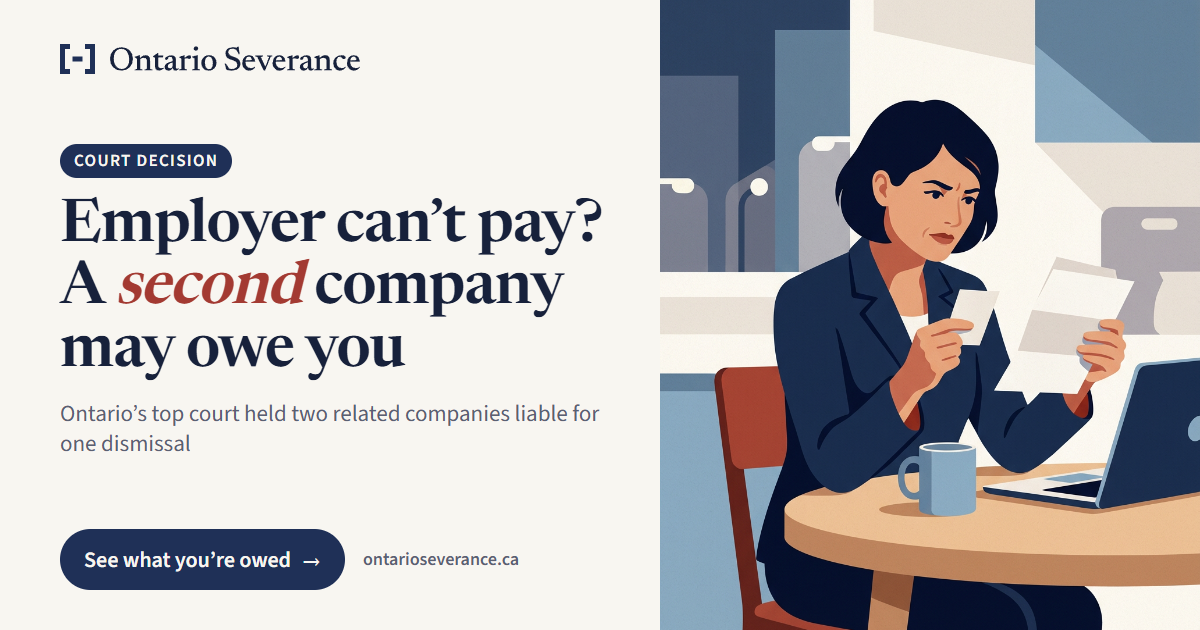
One name on your contract, another on your pay stub, a third on the sign out front. When you're let go, which company owes you? In May, the Court of Appeal for Ontario confirmed the answer can be more than one, and that matters most when the first one doesn't pay.
What happened
In B. Estate v. 2113626 Ontario Inc., (Hampton Inn and Suites), 2026 ONCA 323, a manager was hired in 2009 to run a hotel in Brantford on a three-year contract. She was let go five months in.
She sued one numbered company for wrongful dismissal and got a $120,000 judgment that nobody contested. Then it became clear that company would not pay it.
So she sued a second numbered company tied to the same hotel. She died before the case was decided, and her estate carried it on.

What the court decided
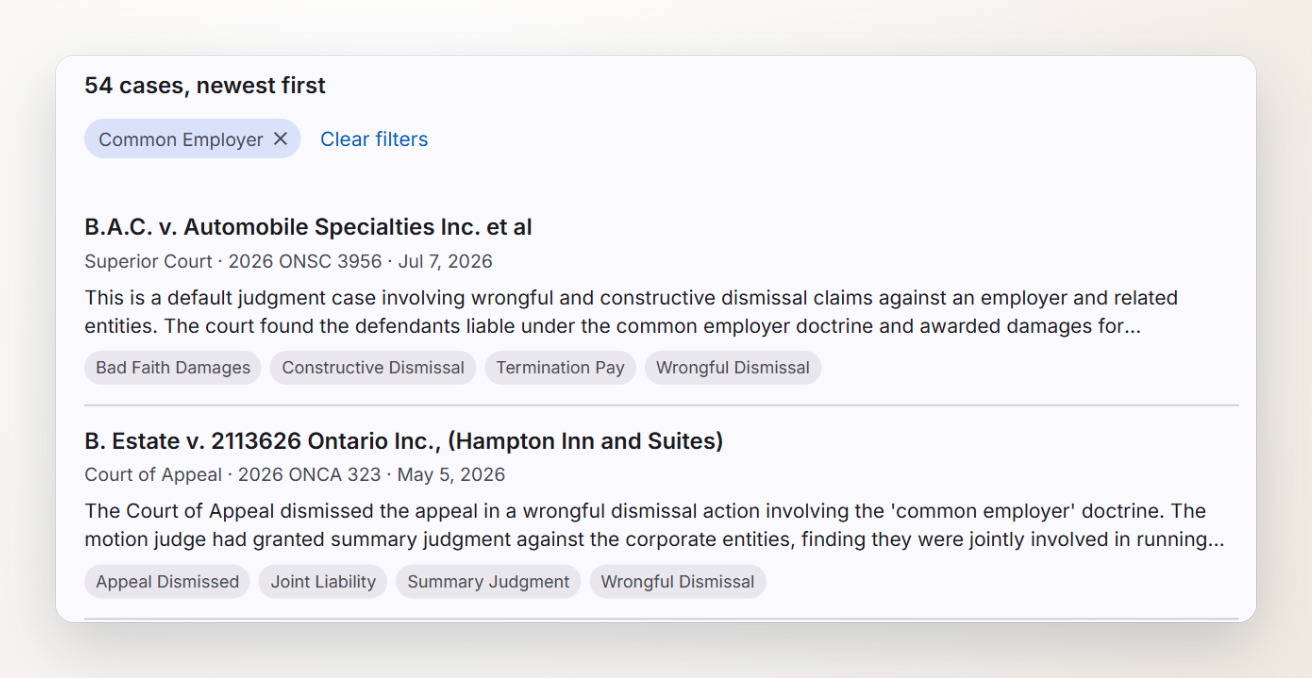
A judge found the two companies were "common employers": both were jointly involved in running the hotel, and both meant to have an employment relationship with the manager. The second company was held liable for the dismissal along with the first.
The second company appealed, arguing in part that she had already had her day in court. The Court of Appeal dismissed the appeal on April 30, 2026. It said the companies were closely tied and their roles were not easy to tell apart, so it would be unfair to block her claim once the first company didn't pay.
One limit: the claim against an individual behind the business was dismissed. Common employer is about companies.
The ESA has a similar rule
Under s. 4 of the Employment Standards Act, businesses that carry on related activities are treated as one employer, and each is liable for wages owing to an employee of any of them. A shareholder who is an individual is generally not included.
What to take from it
- Write down every company name on your contract, pay stubs, T4 and termination letter.
- A company with no money isn't always the end. A related company that helped run the business may owe you too.
- Know your number first. You can't ask the right company for the right amount without it.
Start with what you're owed
The calculator shows your legal minimum and what courts have awarded in cases like yours. Have a question about who your employer really is? Ask it in the chat →
Ontario Severance is independent and isn't a law firm; this is general information. From a chat or a calculator result, you can ask us for help finding an employment lawyer, and we reply within one business day.
Sources
This article is general information about Ontario employment law, not legal advice. The law and its application change, and every case turns on its own facts: for advice about your situation, speak with an Ontario employment lawyer.