Court decision
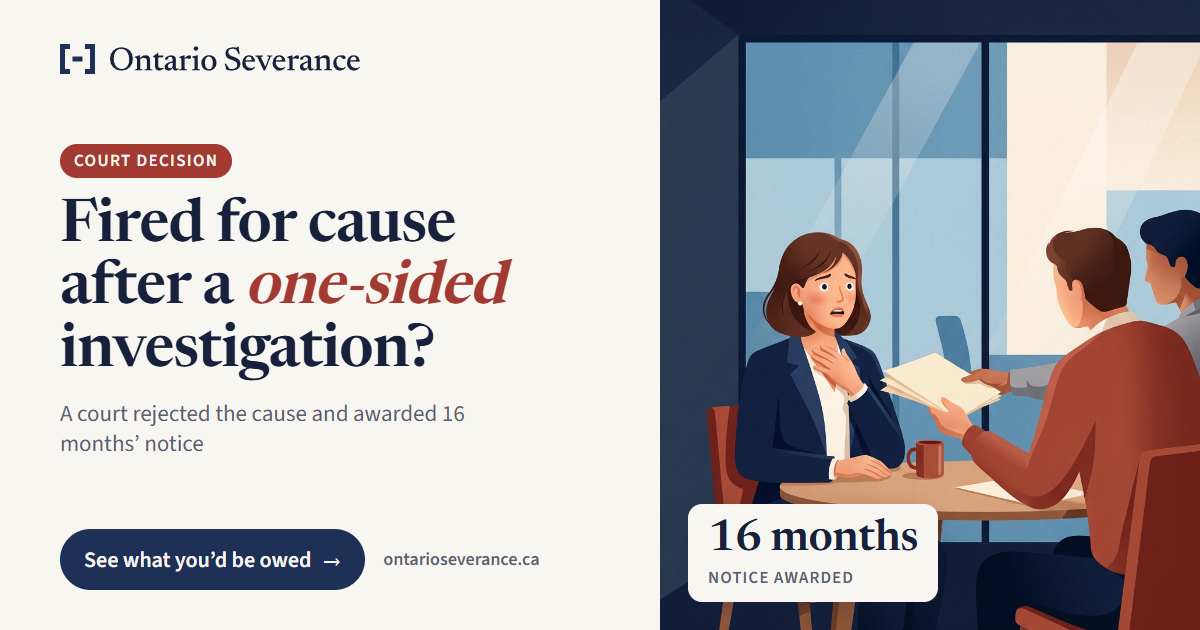
Fired for cause after a one-sided investigation?
Being fired "for cause" can feel like the end of the road: no notice, no severance, and a mark that follows you. An Ontario court just showed it isn't always the last word, especially when the employer's investigation was built to find a reason, not the truth.
What happened
In Silva v. Royal Bank of Canada, 2026 ONSC 3841, a financial planner with almost 12 years at the bank was dismissed for cause in 2018, at 47. The bank said she had sent confidential information to her personal email, processed client withdrawals before getting their authorization, and told clients to backdate trade documents.
The Superior Court disagreed. It called the two emails "entirely trivial" and found the evidence didn't show the rest. At most, the judge wrote, her conduct called for coaching or guidance. The bank's own dismissal checklist even recorded that alternatives to firing her weren't considered.
Why the investigation mattered
An employer's investigation doesn't have to be perfect, the court said, but it has to be adequate: thorough, fair and looking at the whole picture. This one wasn't.
- She got a summary of the questions only on the morning of her interview.
- She couldn't use her computer, calendar or diary to explain herself.
- Clients weren't asked what had actually happened.
- The push came from her managers, one of whom she had filed a retaliation complaint against a month earlier.
The judge described it as "ammunition gathering" rather than a search for the facts.

What the court awarded
The court set her reasonable notice (the pay courts award in place of notice) at 16 months, about $313,000 before adjustments. Because the "for cause" notice the bank filed with the industry regulator kept other firms from hiring her, it also awarded $1.92 million for lost earning capacity, $150,000 for mental distress, and punitive damages to condemn the bank's conduct. It ordered that regulatory notice corrected, and found she had "more than fulfilled" her duty to look for work.
If you were fired for cause
Cause is a high bar. The court asked whether the conduct was so serious that the job couldn't go on, and whether firing was a proportionate response. Many employers say "cause"; far fewer prove it.
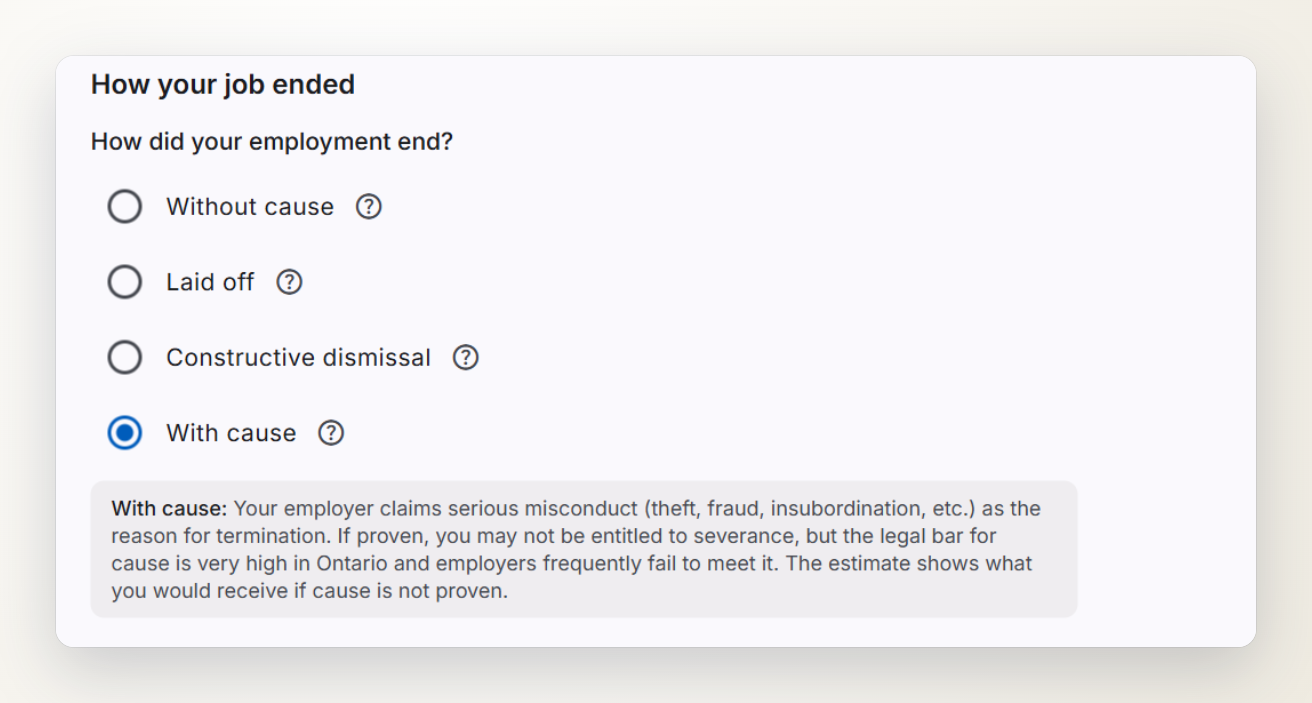
The calculator shows the ESA minimum and what courts have awarded in cases like yours, even when your employer alleges cause. Or ask your question in the chat, and browse decisions on just cause.
Ontario Severance is independent and isn't a law firm; this is general information. From a chat or a calculator result, you can ask us for help finding an employment lawyer, and we reply within one business day.
Sources
This article is general information about Ontario employment law, not legal advice. The law and its application change, and every case turns on its own facts: for advice about your situation, speak with an Ontario employment lawyer.