Court decision
Off sick for months? Your job isn't over, a court says
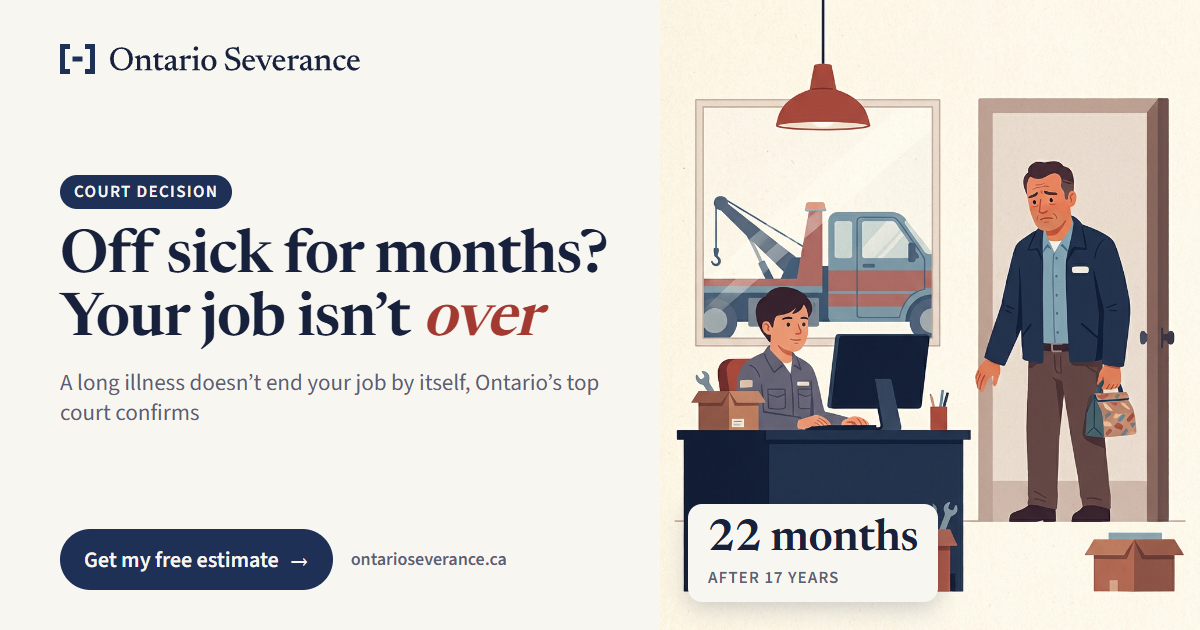
You've been off work for months after surgery or an injury. Then your employer says your job is gone, or that your contract simply ended because you can't do the work. Ontario's top court has just confirmed that it isn't that simple: a long absence doesn't end your job by itself, and it's the employer who has to prove otherwise.
19 months off, then a demotion
In Hill v. 1359768 Ontario Inc. (B&B Towing), 2026 ONCA 577, decided on August 10, 2026, the employee had worked about 17 years for a towing company, as a "road boss" managing its drivers. He went on disability leave after emergency surgery in May 2020.
While he was off, the employer told him his position had been eliminated: he could come back as a tow truck driver, at lower pay after eight weeks. He returned in January 2022, was injured again in February and left, saying he had been dismissed.

"Frustration": the employer's argument
The employer argued the contract was "frustrated": ended by his injuries, with nobody at fault, because he could no longer do the job.
The trial judge rejected it, and the Court of Appeal agreed. What mattered:
- The employer has to prove it. Frustration is established only when there is no reasonable likelihood of the employee returning to work within a reasonable time.
- A temporary illness isn't enough. Neither is being unable to do minor parts of the job.
- Accommodation counts. The employer had accommodated his lifting limits before, and didn't show it couldn't do so again.
- The medical evidence. His doctors had said a trial return to work could be considered, and the employer never asked them whether he was likely to return.
What he was awarded
The demotion was a constructive dismissal, and reasonable notice was set at 22 months, which the employer didn't dispute on appeal.
The employer did win one point. The Court of Appeal removed $125,640 awarded for losing the use of the company tow truck and cellphone: those were work tools, not personal benefits.
One more thing to know: under the Employment Standards Act, Ontario's guide says the exemption from termination notice or pay for a frustrated contract doesn't apply when the cause is an employee's illness or injury.
What would your notice look like?
A serious, lasting condition that can't be accommodated can still frustrate a contract. But if you were pushed out during or after a leave, check your numbers before you accept that you're owed nothing.
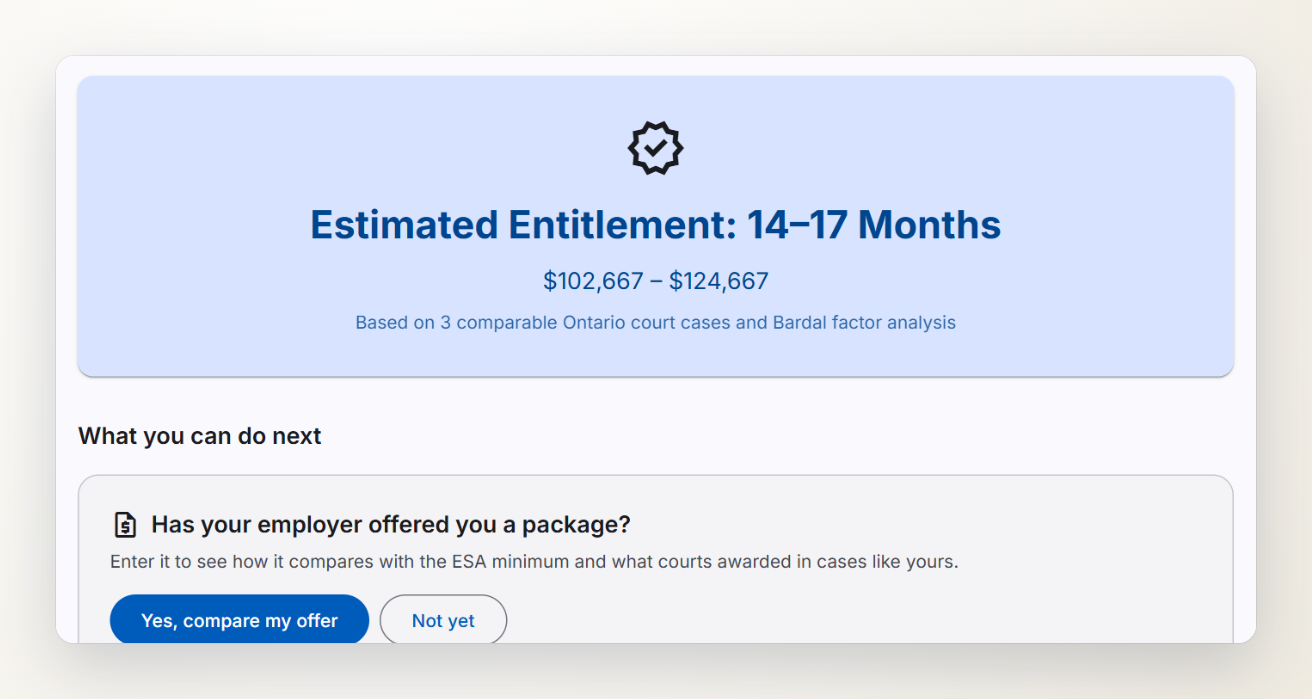
You can also ask your question in the chat, or read our summary of the decision.
Ontario Severance is independent and isn't a law firm; this is general information. From a chat or a calculator result, you can ask us for help finding an employment lawyer, and we reply within one business day.
Sources
This article is general information about Ontario employment law, not legal advice. The law and its application change, and every case turns on its own facts: for advice about your situation, speak with an Ontario employment lawyer.