Know your rights
Your pay was cut. Can you quit and still get severance?
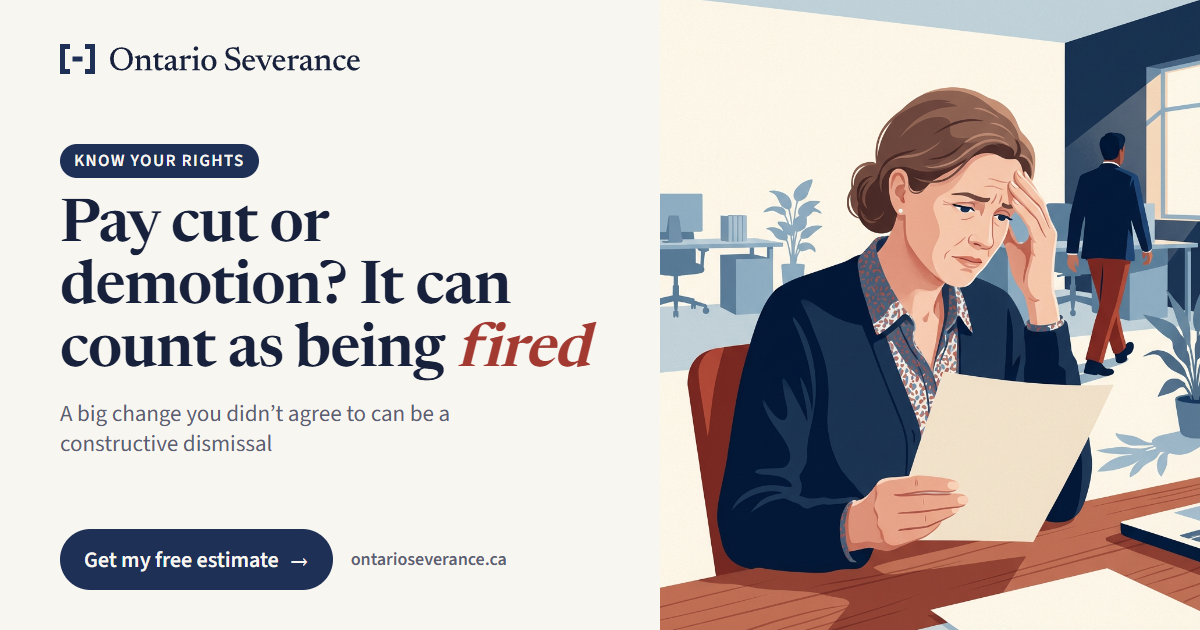
Your employer cuts your pay, demotes you or moves your job across the province, and tells you to take it or leave it. Leaving doesn't always mean walking away with nothing. When the change is big enough, Ontario law can treat it as a dismissal, even though you're the one who resigned. It's called constructive dismissal.
What counts as a big enough change?
Ontario's guide to the Employment Standards Act (ESA) says a constructive dismissal may occur when an employer makes a significant change to a fundamental term of your job without your consent. Its examples:
- a significant cut in salary;
- a significant negative change to your work location, hours, authority or position;
- harassment or abuse by the employer;
- an ultimatum to "quit or be fired".

The test courts use
The Supreme Court of Canada set it out in Potter v. New Brunswick Legal Aid Services Commission, 2015 SCC 10.
The first is a single change the employer makes on its own that breaches your contract and substantially alters an essential term of it. Typically, that's a change to your pay, your duties or your place of work. The court asks whether a reasonable person in your position would have felt the essential terms of the job were being substantially changed.
The second is a series of acts that, taken together, show the employer no longer intends to be bound by the contract, such as treatment that makes staying intolerable.
What can sink a claim
- The proof is on you. The employee has to establish the constructive dismissal.
- Your contract may allow the change, or you went along with it. Then it isn't a breach.
- The change is minor. A small change doesn't count.
- You waited too long. Under the ESA, you have to resign in response within a reasonable period.
So think before you resign: if the change turns out not to be serious enough, a resignation is just a resignation.
What you could be owed
If it is a constructive dismissal and you resign in response, the ESA treats it as a termination: termination pay, plus severance pay if you qualify. Courts award damages in place of reasonable notice, as for any dismissal without cause.
The calculator has a "Constructive dismissal" option.
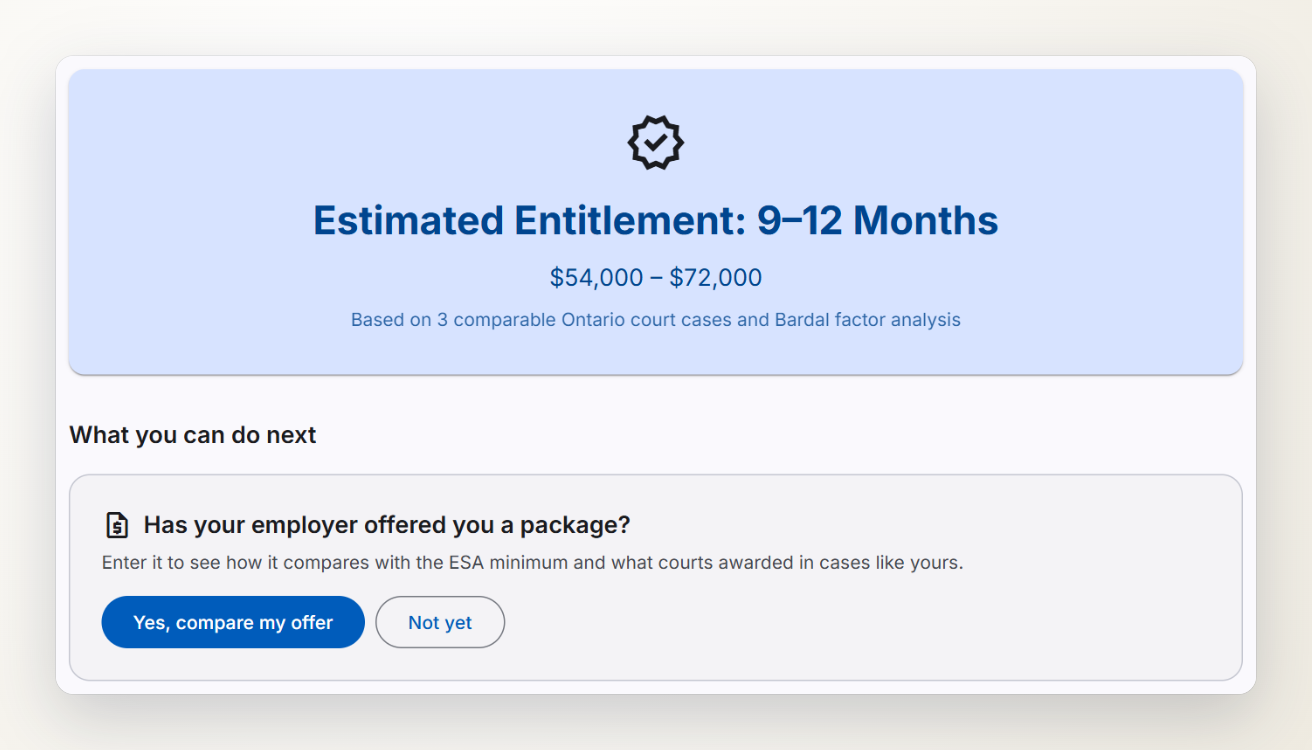
You can also ask your question in the chat, or read court decisions on constructive dismissal.
Ontario Severance is independent and isn't a law firm; this is general information. From a chat or a calculator result, you can ask us for help finding an employment lawyer, and we reply within one business day.
Sources
This article is general information about Ontario employment law, not legal advice. The law and its application change, and every case turns on its own facts: for advice about your situation, speak with an Ontario employment lawyer.