Court decision
Took a lower-paying job after being fired? It counts
You lost your job, the bills kept coming, and you took the work you could find, for less money. Does that paycheque cut into what your old employer owes you? Ontario's Court of Appeal answered in April 2026: yes, it generally does.
What the court decided
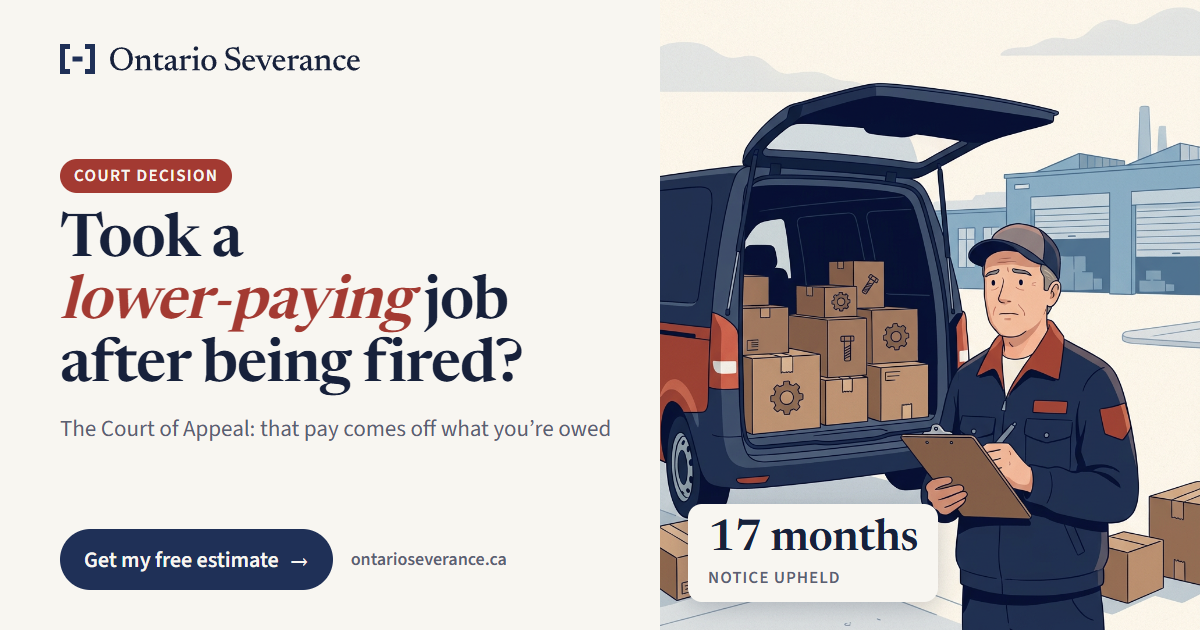
In Williamson v. Brandt Tractor Inc., 2026 ONCA 272, a salesperson was dismissed at 56, after 18 years. The trial judge found the employer had no just cause and awarded him 17 months' pay in lieu of notice.
After the dismissal, he took a job driving a parts vehicle, at a lower pay grade. The trial judge refused to subtract what he earned there, because it came from a "lower-paying or ranking position".
The Court of Appeal changed that one point. It found no authority for leaving out earnings because they come from a lesser job. The $32,881.43 he earned in the new job during the notice period comes off his damages. The 17 months stood.

Why a new paycheque counts
Reasonable notice is the pay courts award in place of the notice you should have received. What you earn elsewhere during that period reduces your loss; lawyers call this mitigation. The court restated the rule: employment income earned during the notice period is "generally to be treated as mitigation of loss".
The part that helps you
The employer also argued the employee had failed to mitigate, because he admitted he never looked for a comparable job in sales. The court disagreed.
It was the employer's burden to show not only that he didn't pursue comparable work, but that such work was available and that reasonable steps would have landed him a comparable position. The employer didn't show that comparable work was available.
The finding of no just cause stood too. The employer relied on a customer complaint as the final incident, but the customer never testified.
What it means if you've found work
- A lesser job didn't shorten the notice period here: the 17 months stayed.
- What you earn during the notice period generally comes off the total, whatever the job.
- If your employer says you should have found better work, it has to prove that work was there.
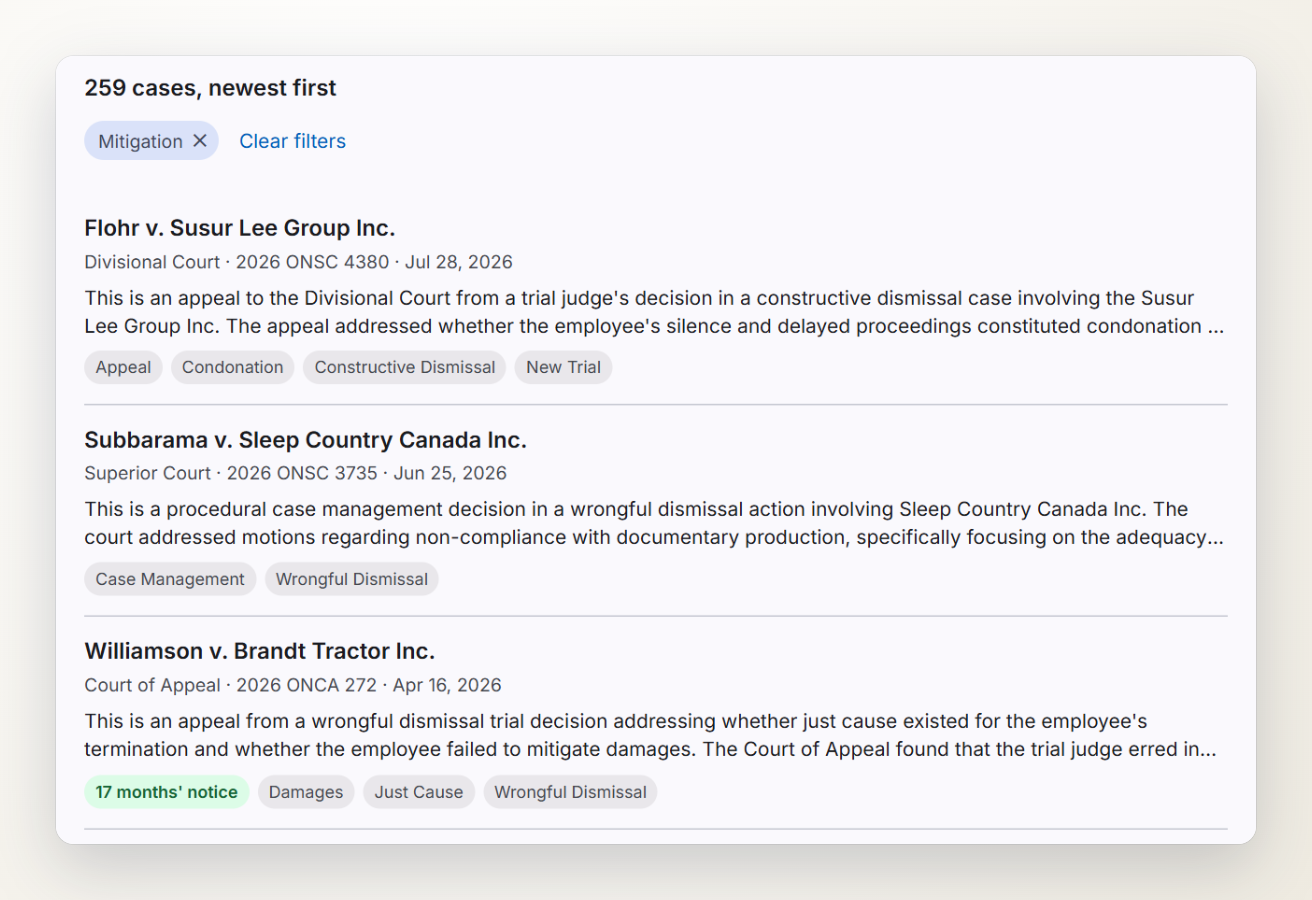
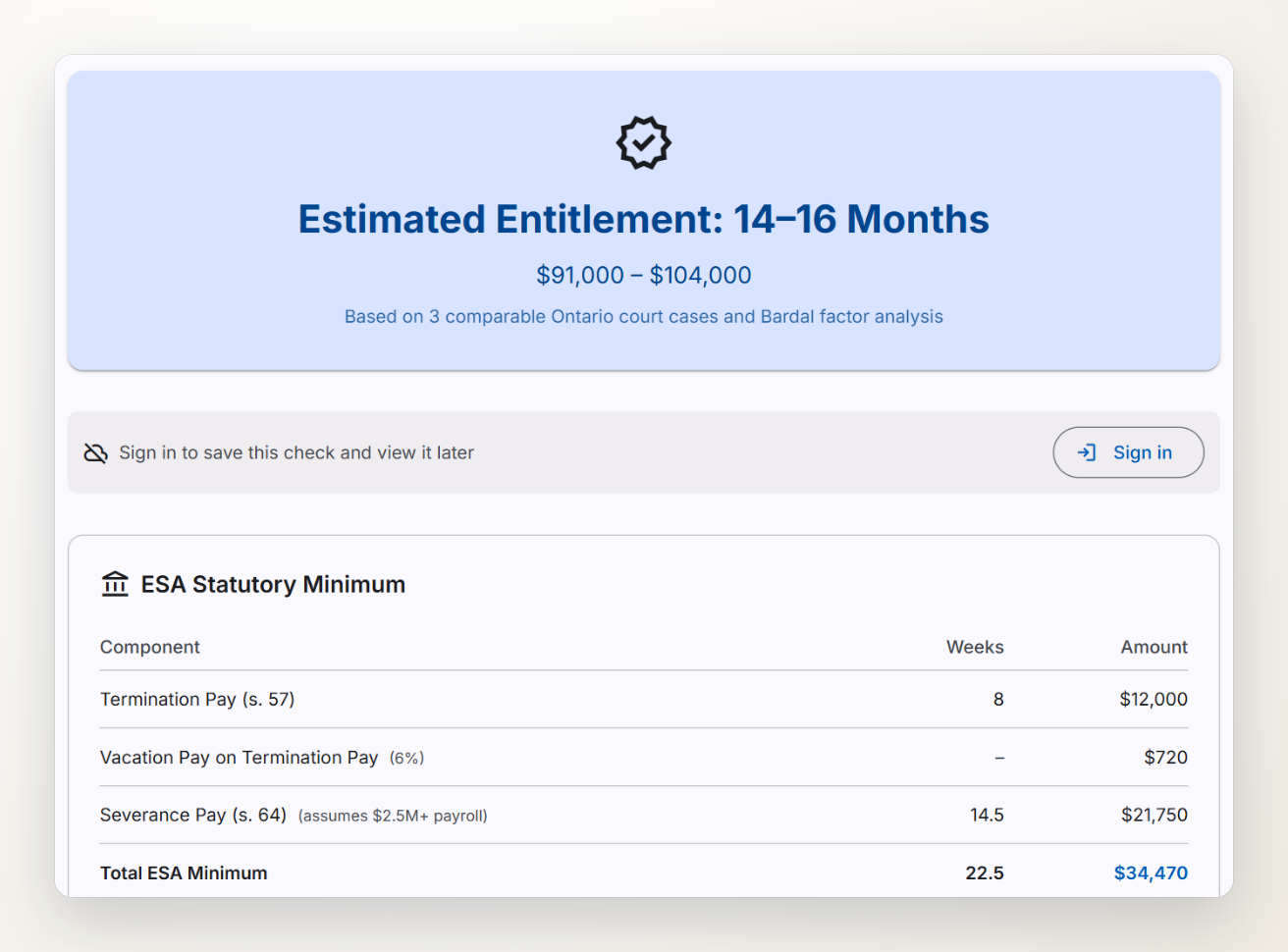
The calculator shows the ESA minimum and what courts have awarded in cases like yours, before any pay from a new job is taken off. Or ask your question in the chat, and read more decisions on mitigation.
Ontario Severance is independent and isn't a law firm; this is general information. From a chat or a calculator result, you can ask us for help finding an employment lawyer, and we reply within one business day.
Sources
This article is general information about Ontario employment law, not legal advice. The law and its application change, and every case turns on its own facts: for advice about your situation, speak with an Ontario employment lawyer.