Court decision
Fired for "time theft" after 17 years? A court said no
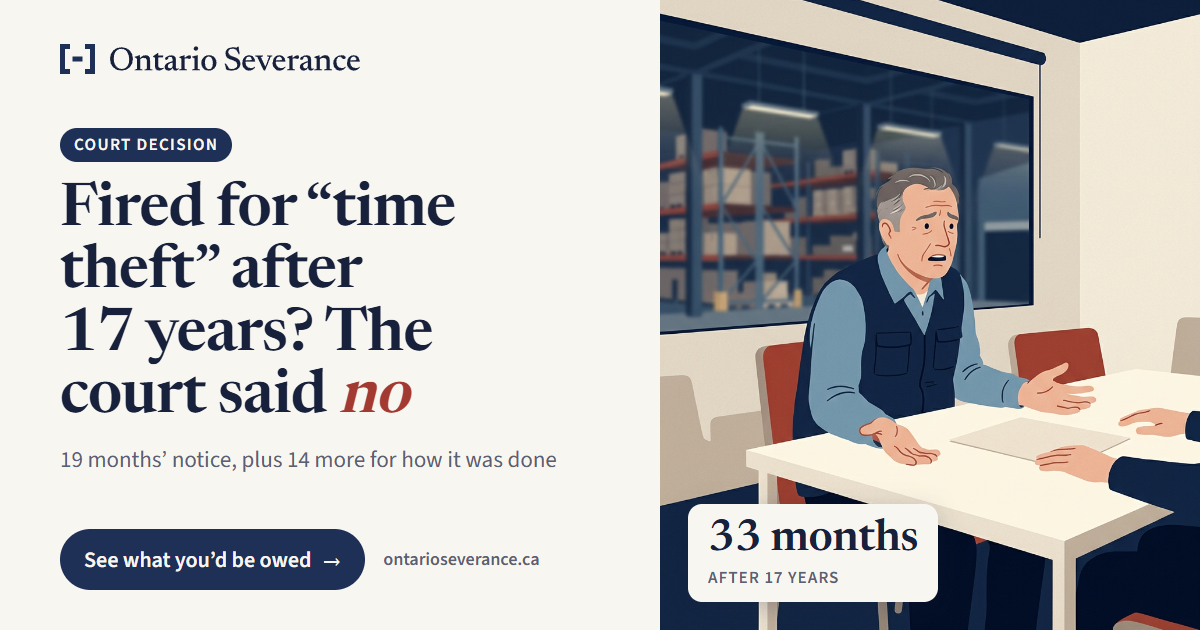
You did the job the way you were trained, the way everyone before you did it. Then one day your employer calls it fraud and walks you out with nothing. An Ontario court just looked at exactly that, and sided with the employee.
What happened
In W. v. Olympic Wholesale, 2026 ONSC 3620, a night shift supervisor at a food distribution company was fired for cause in 2023. He was 55 and had been there 17 years. The letter said "fraudulent activity".
His offence: when the crew finished early, he let them go home and topped up their hours to the end of the shift. The employer called it time theft.
The evidence told another story. Supervisors had done the same thing since before he was hired, and another supervisor had trained him to do it. There was no written policy. He made every edit under his own passcode, hid nothing, and gained nothing from it.

Why it wasn't cause
The employer has to prove cause, and the court looks at the whole context. Here the judge found the top-ups were an ingrained practice applied by every night shift supervisor, not a dishonest act.
It also wasn't the kind of conduct that takes away the legal minimums. Ontario's regulation removes termination pay only for "wilful misconduct, disobedience or wilful neglect of duty that is not trivial and has not been condoned by the employer".
What the court awarded
The court set reasonable notice (the pay courts award in place of notice) at 19 months.
Then it added 14 more, for a total of 33. The reason was how the firing was done: only he was investigated, he was "ambushed" in a meeting with no warning and no one beside him, and he left with a fraud accusation and no reference. He couldn't find work after. The court refused punitive damages on top.
That extension came from this employer's conduct, so don't count on one. The 19 months is the part that looks like other cases.
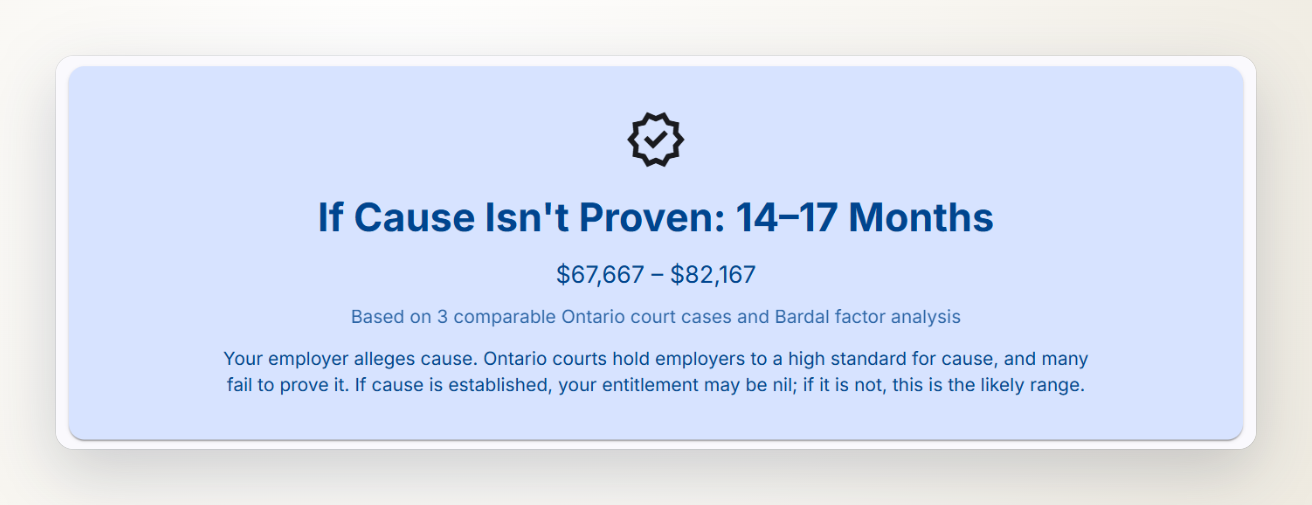
If this is you
- "For cause" is a claim, not a verdict. Your employer has to prove it.
- Write down who else did the same thing, who trained you, and who knew.
- Keep the letter and anything showing how the meeting went.
Another recent decision turned on a one-sided investigation.
Have a question about your own case? Ask it here →
Ontario Severance is independent and isn't a law firm; this is general information. From a chat or a calculator result, you can ask us for help finding an employment lawyer, and we reply within one business day.
Sources
This article is general information about Ontario employment law, not legal advice. The law and its application change, and every case turns on its own facts: for advice about your situation, speak with an Ontario employment lawyer.