
Law change
Minimum wage rises to $17.95 on Oct. 1: check your pay
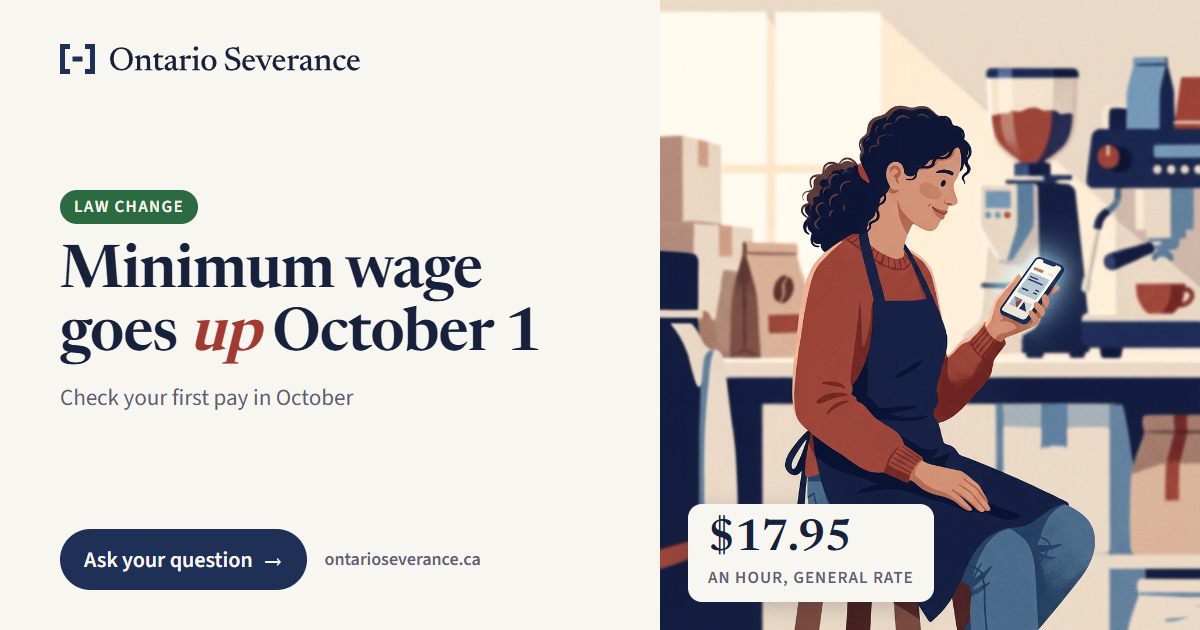
If you earn minimum wage in Ontario, you get a raise next week. On October 1, 2026, the general minimum wage goes from $17.60 to $17.95 an hour. Here's how to make sure your first October pay gets it right.
The new rates, from October 1
- General minimum wage: $17.95 an hour (was $17.60).
- Students: $16.90 an hour (was $16.60). This rate is for students under 18 who work 28 hours a week or less while school is in session, or who work during a school break or the summer.
- Homeworkers (people who do paid work from their own home): $19.70 an hour (was $19.35).
- Hunting, fishing and wilderness guides: $89.75 for less than 5 consecutive hours in a day, $179.50 for 5 hours or more (were $88.05 and $176.15).
The new rates apply until September 30, 2027.

Why it goes up every October
The Employment Standards Act adjusts the minimum wage every October 1 in line with Ontario's Consumer Price Index, the government's measure of inflation. The rate is rounded to the nearest 5 cents, can never go down, and must be published by April 1.
How to check your first October pay
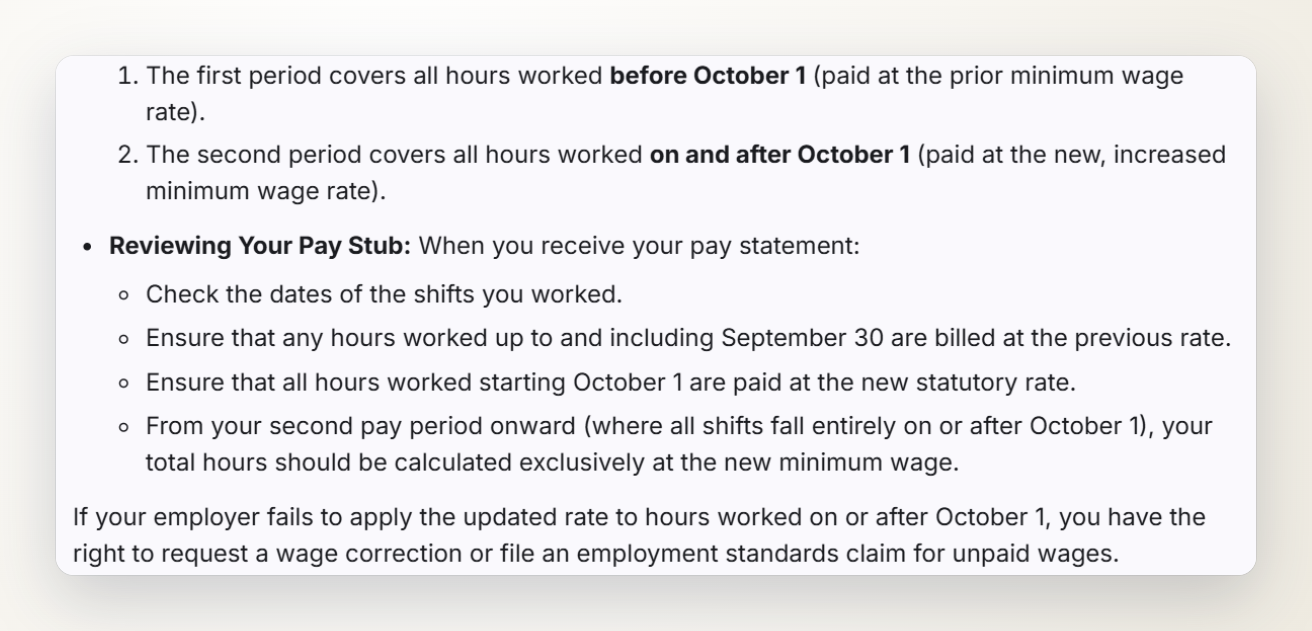
When the minimum wage changes partway through a pay period, your pay is worked out as if it were two separate periods, one before October 1 and one from October 1 on. So shifts from September 30 or earlier can be paid at the old rate, and every hour from October 1 on must be paid at least the new one.
Also worth knowing:
- Your regular pay for a pay period, divided by the hours you worked, must come to at least the minimum wage.
- Overtime pay must work out to at least one and a half times the minimum wage for each overtime hour.
- If you're paid fully or partly on commission, it must still add up to at least the minimum wage for each hour you work.
If your employer doesn't apply the new rate, you can raise it with them or file an employment standards claim. Read court decisions on unpaid wages →
Lost your job? Your wages matter there too
If you're let go without cause, the ESA's termination pay is a lump sum equal to your regular wages for a regular work week, for each week of notice you're owed. And a court can award more than that minimum.

Ontario Severance is independent and isn't a law firm; this is general information. From a chat or a calculator result, you can ask for a free initial consultation with an employment lawyer.
Sources
This article is general information about Ontario employment law, not legal advice. The law and its application change, and every case turns on its own facts: for advice about your situation, speak with an Ontario employment lawyer.