Know your rights
Fired? Your benefits can't just stop the same day
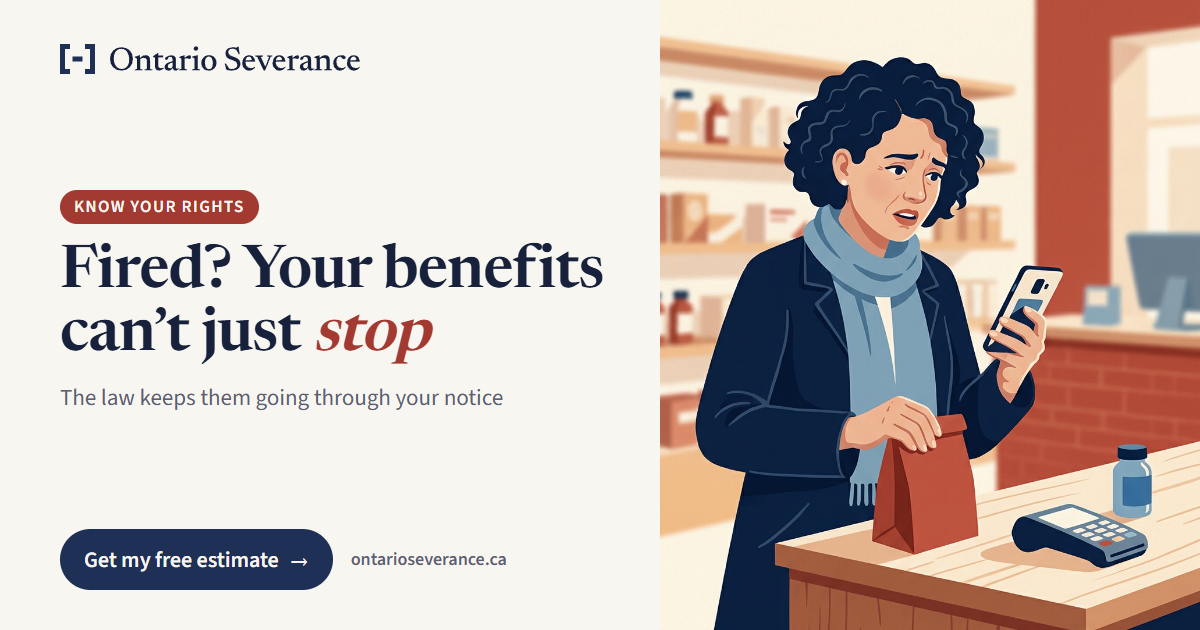
Let go, and told your health and dental coverage ends today? For most employees, it can't. Ontario's Employment Standards Act makes your employer keep your benefit plan going through your notice period, and a court can add the value of your benefits to what you're owed.
The minimum: your plan keeps running
When you're dismissed without cause, the ESA gives you a notice period based on your years of service: 1 week once you have worked 3 months, rising to 8 weeks at 8 years or more (ss. 54 and 57). Someone with 4 and a half years gets at least 4 weeks.
Whether you get that notice as time on the job or as pay instead, your employer must keep making the contributions that keep your benefits going until the notice period ends (ss. 60(1)(c) and 61(1)(b)).
If you get pay instead of notice, the Act treats you as still actively employed during that notice period for any benefit plan where leaving active employment could cost you coverage (s. 62). Missed contributions count as unpaid wages under the Act (ss. 60(3) and 62(2)).

Beyond the minimum: courts count your benefits
Beyond the ESA weeks, a court can award reasonable notice, the pay courts award in place of notice, which can be much longer, unless a valid termination clause limits you to the ESA minimum. It covers more than salary.
In L. v. Veeva Software Systems, Inc. and Veeva Systems Inc., 2025 ONSC 7010, a 51-year-old senior product manager earning $150,000 was let go after 4 and a half years. His termination clause was void, and the court set his notice at 6 months.
The employer said he hadn't proven what his benefits were worth. The court replied that an employee is presumed to be entitled to all contractual benefits during the notice period, and courts usually value them at 10% of base salary. It awarded $7,500 for 6 months of benefits, and noted the evidence that he needed ongoing medication.
One catch: he also claimed $4,727.77 in medical bills his plan would have covered. The court refused to add those on top of the 10%, because it could pay him twice for the same loss, and the bills came to less than the $7,500 awarded.
See what your benefits add
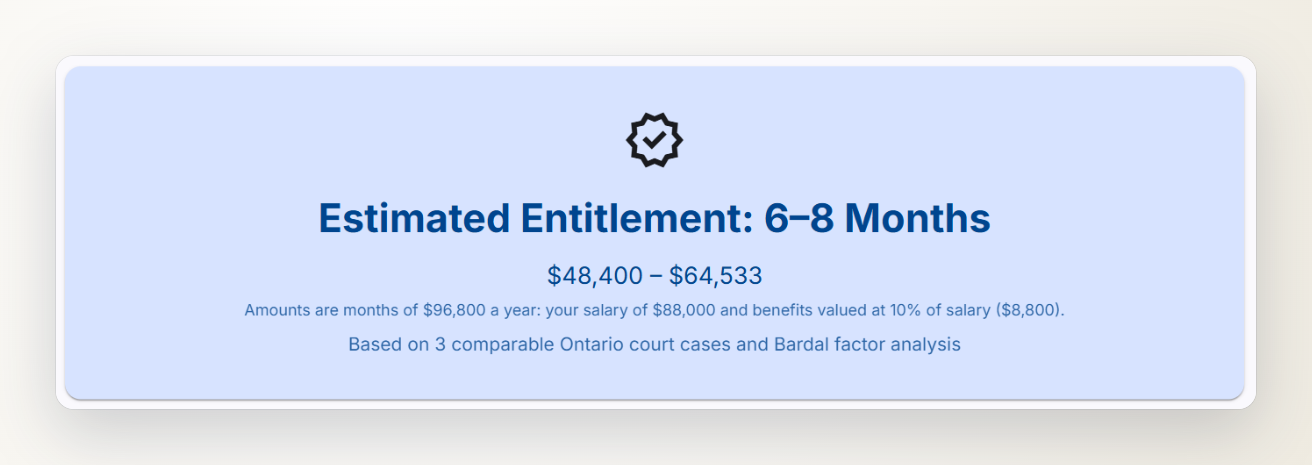
Our severance calculator asks whether you had health, dental or other benefits through work. Tick the box, and it adds them at 10% of your salary, the figure courts usually use.
If your coverage is cut
- Ask your employer, in writing, the date your coverage ends, and compare it with your ESA notice weeks.
- Keep a record of what the lost coverage costs you, such as prescriptions you now pay for.
- Before signing a release, check whether the offer keeps your benefits going or pays you for them.
Questions about your package? Ask your question → or browse decisions on loss of benefits.
Ontario Severance is independent and not a law firm; this is general information. From a chat or a calculator result, you can ask us for help finding an employment lawyer, and we reply within one business day.
Sources
This article is general information about Ontario employment law, not legal advice. The law and its application change, and every case turns on its own facts: for advice about your situation, speak with an Ontario employment lawyer.