Court decision
Gave your two weeks to get a better deal? It can backfire
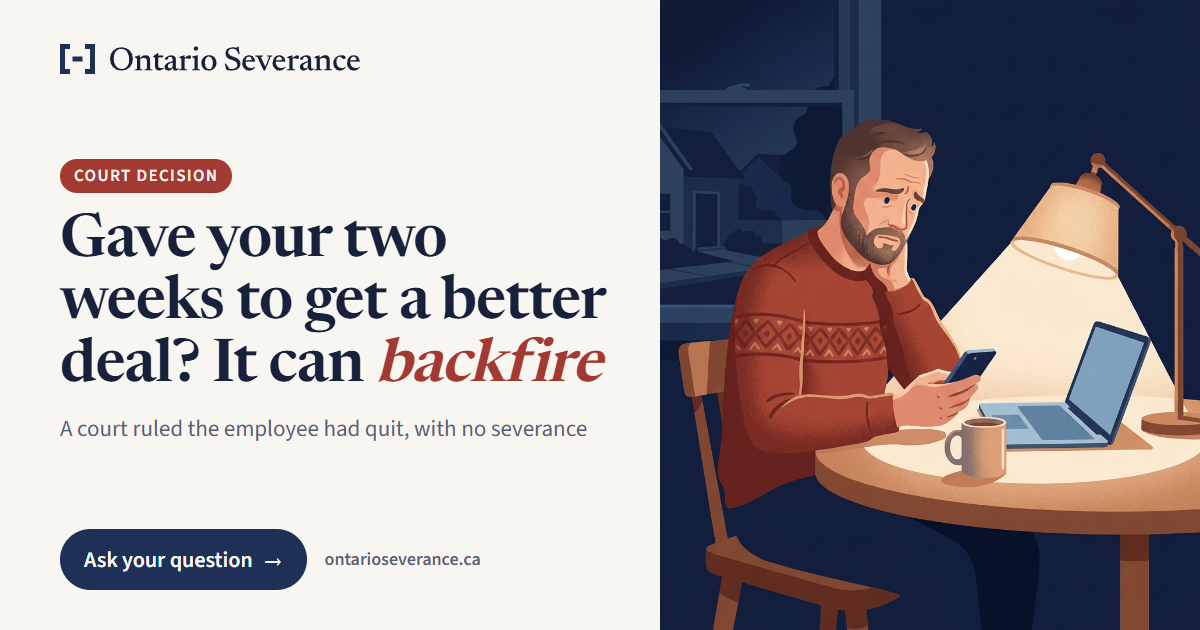
Unhappy with your pay, you hand in your two weeks’ notice, hoping your employer will come back with a better offer. A September decision of the Ontario Superior Court shows what can happen when the talks fail: the employee had quit for good, with no severance.
What happened
A roofing company hired a sales representative in December 2017, on $865 a week plus commissions and bonuses, paid to his own company at his request.
Unhappy with how his bonuses were worked out, he had already given notice once, in October 2019, and been talked into staying. On July 16, 2020, he texted his two weeks’ notice again, then turned down a new sale. He spent the next weeks negotiating a new contract with an employer who wanted him to stay. On August 12, he broke off the talks; he later sued for wrongful dismissal.

What the court decided
He was an employee, even though he was paid through his own company: he had a salary, was supervised, had no say over prices and took no business risk. (More in our article on contractors on paper.)
But he had resigned. “A resignation must be clear and unequivocal,” the court noted, and his was: he gave notice as his contract allowed and refused new work. Negotiating afterwards didn’t take it back, and the employer never made substantial or unilateral changes to his contract or his work, so there was no constructive dismissal; the underpaid bonuses the court found didn’t change that. His job ended on July 30, 2020.
So he got no pay in lieu of reasonable notice, the pay courts award when an employer ends the job.
What quitting doesn’t take away
He was still owed what he had earned:
- $3,460 in unpaid public holiday pay, going back to March 2018 because of the limitation period, and $692 for his last four days;
- $12,688.09 in bonuses underpaid on 12 projects;
- $49,607.66 in commissions and $26,339.56 in bonuses on seven projects he sold but hadn’t billed;
- 4% vacation pay on everything he earned: base salary, holiday pay, commissions and bonuses.
The court left the final totals, including any tax deductions owed to the Canada Revenue Agency, for the parties to work out.
Under the Employment Standards Act, wages owed when a job ends, accrued vacation pay included, are due within seven days or by the next pay day, whichever is later. Vacation pay is at least 4% of wages, 6% after five years.
Before you send that notice
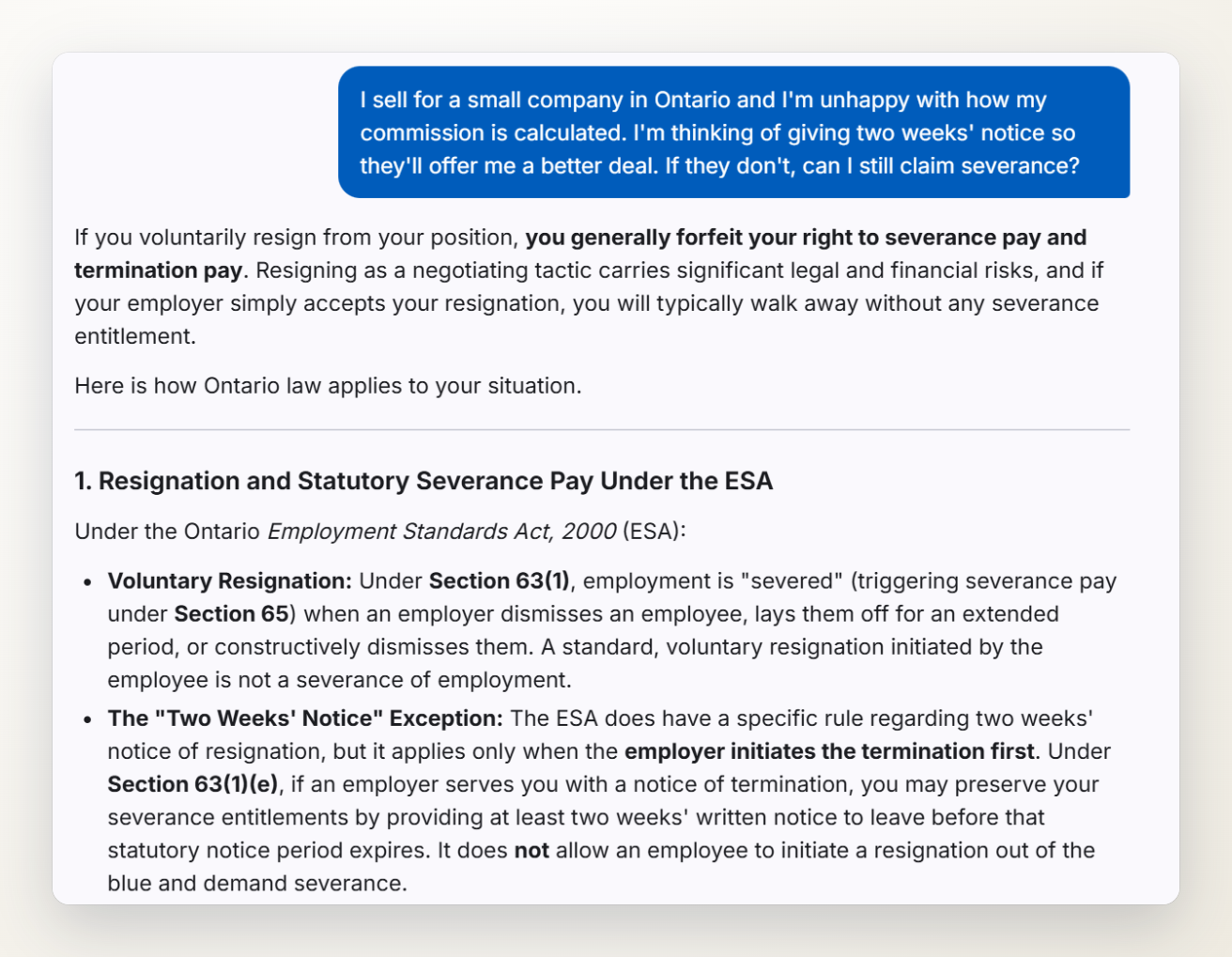
Here, a notice meant to open talks ended the job, even with an employer that wanted the employee to stay. If your employer has already cut your pay or changed your job, that’s a different question: see our guide to constructive dismissal.
Not sure where you stand? Describe your situation to our assistant. If you’ve been let go instead, the calculator shows what you could be owed.
Read the decision’s case page, or more decisions on resignation.
Ontario Severance is independent and not a law firm. This is general information, not legal advice. From a chat or a calculator result, you can ask us for help finding an Ontario employment lawyer, and we reply within one business day.
Sources
This article is general information about Ontario employment law, not legal advice. The law and its application change, and every case turns on its own facts: for advice about your situation, speak with an Ontario employment lawyer.